Pricing Reality Check: Los Cabos Real Estate After the Pandemic Boom
A market built on a lifestyle rush
During the pandemic, Los Cabos became a poster child for an escape‑driven real‑estate boom. Remote work freed buyers from their home cities, and many embraced the "life is too short" mantra; demand for sun‑drenched homes on Mexico’s tip surged. By the end of 2021 the local MLS logged roughly 2,100 house and condo sales worth about $1.645 billion, the biggest year on record. Sales spiked as travel restrictions eased; people rushed to vacation homes they had dreamed of for 18 months. Sight‑unseen purchases and deep pockets from U.S. and Canadian buyers pushed prices well beyond pre‑COVID norms.
The surge was reflected in overall market volume. Market analysis shows that 2021 transaction volume exceeded $1.60 billion, nearly a 296 percent jump over the previous year. That volume slid slightly in 2022 and again in 2024 before rebounding in 2025 to about $1.59 billion. In other words, the pandemic frenzy didn’t last; the market matured and normalised as travel resumed and buyers became more selective.
A tale of two markets: beachfront homes vs. condos
Nowhere is the post‑boom adjustment clearer than on the beachfront. A 2025 beachfront report notes that total spending on beachfront property fell from roughly $181 million in 2024 to about $144 million in 2025, a contraction of nearly 20 percent. The divide between property types is sharp:
Condos: The median price for a beachfront condo jumped 50 percent, climbing from about $1.0 million in 2024 to $1.5 million in 2025. Fewer units were sold (34 versus 43 the prior year), but the deals were bigger. Entry‑level inventory has virtually disappeared, and price per square metre has risen about 14 percent.
Single‑family homes: The correction was significant. The median sold price for beachfront houses dropped from $8.4 million to $6.6 million, a 21 percent decline. It now takes around 14 months (about 425 days) to sell a beachfront home versus eight months in 2024, and properties typically close for roughly 93 percent of their list price. Buyers have negotiating power, and unrealistic list prices languish.
The condo market’s strength reflects scarcity of turnkey units and relentless second‑home demand. Houses, by contrast, are subject to bigger discounts because investors prioritise cash flow and are unwilling to pay pandemic premiums. The land segment also softened slightly; a 12 percent discount in 2025 was largely due to a single bulk deal rather than a broad decline.
Inventory surge and the return of price reductions
High inventory is changing the game. A Q4 2024 market report notes that total inventory reached 1,935 completed houses and condos, the highest level on record. More than 60 percent were finished units rather than pre‑construction, giving buyers ample choices. Price reductions spiked accordingly: 1,181 reductions occurred in 2024 compared with 547 in all of 2023.
In Q1 2025 alone there were 633 price cuts, signalling that pandemic‑era price expectations were being recalibrated.
The same report warns that continued inventory growth will pressure serious sellers to get prices right. Average days on market for houses jumped from 109 to 144 days in early 2025, while condos increased from 116 to 128 days, showing buyers aren’t rushing into deals. These figures contrast sharply with the frantic "sight‑unseen" purchases of 2021.
Pricing myths vs. current realities
A decade of appreciation has conditioned many owners to think Cabo real estate only goes up. Over the past ten years, property prices in Cabo San Lucas have risen roughly 120 percent in nominal terms and about 45 percent after inflation. That long‑term growth is real, but it doesn’t mean every listing today is worth a pandemic premium. In 2026, typical properties in Cabo San Lucas sell for about 6 percent below their list price, and high‑end homes can see 10 percent discounts when inventory is heavy. Buyers are more informed; they look at sold comparables, cost to build and rental yields before making offers.
Several misconceptions persist:
"The boom never ends." 2021’s record year was fuelled by remote work and lifestyle migration. Sales cooled by 2023 and 2024 as travel normalised and speculative enthusiasm faded. A realistic seller must view 2021 as an anomaly, not a new baseline.
"My home is worth whatever I want." High inventory and extended days on market show otherwise. Buyers have options and will bypass overpriced properties.
"Prices will crash, so I’ll wait." Builders’ costs provide a floor. In luxury communities, construction now runs $500–$1,000+ per square foot, and land scarcity limits supply. Well‑located, well‑built homes still command strong prices, but sellers must align with replacement cost rather than speculative peaks.
New analysis: time on market, sale‑to‑list ratios and supply mix
Beyond headline numbers, recent data shed light on how the market is behaving now. As of early 2026, houses in Cabo San Lucas sit on the market for roughly 216 days on average, while condos move a bit faster at about 184 days. Most typical listings remain active for four to eight months, and days‑on‑market have been rising, signalling a buyer’s market. At the same time, most properties sell below asking price; houses average around 90 percent of list (a 10 percent discount) and condos roughly 95 percent (a 5 percent discount). These metrics prepare sellers for realistic negotiations.
Inventory composition also matters. Condos make up roughly 61–63 percent of all residential inventory in Cabo San Lucas, while detached houses represent about 25–30 percent, with the rest being townhouses and mixed‑use units. New‑build properties represent about 30–40 percent of active condo listings thanks to several large developments delivering units recently. This supply mix explains why condos continue to sell faster and command stronger prices than houses.
Emerging hotspots and infrastructure drivers
Neighbourhood‑level trends tell a nuanced story. Centro (downtown), parts of El Médano near the beach corridor and pockets of Colonia El Médano Ejidal are showing clear signs of gentrification. Price appreciation in these areas has been estimated at 15–25 percent over the past two to three years. Upscale restaurants are replacing older cantinas, traditional homes are being converted into modern vacation rentals, and remote workers and expats are moving in, driving demand. Sellers with property in these zones should weigh the benefits of holding for further appreciation versus cashing in now.
Major infrastructure projects are also boosting demand. The Los Cabos desalination plant, airport capacity expansions at SJD International and road upgrades along the Tourist Corridor are expected to improve water reliability and reduce commute times. Properties near confirmed projects typically see a 5–10 percent price bump when construction is announced and an additional 10–15 percent appreciation once the projects are completed. Staying informed about where infrastructure investment is happening will help sellers set prices that capture future value.
Advice for sellers: price strategically, not nostalgically
Sellers who want results must adjust their expectations. Study sold data, not just asking prices, and focus on 2024–2025 transactions to gauge realistic price ranges. Plan for six to twelve months on the market, depending on the segment. The average beachfront home now sits for about 14 months. Build room for negotiation into your pricing strategy; typical homes in 2026 sell roughly 6 percent below list price. Work with a knowledgeable local broker who can prepare a competitive market analysis, factor in inventory levels and advise on staging or minor upgrades that justify your asking price. Avoid the "test the market" trap — starting high often leads to prolonged exposure and eventual price reductions. Begin at market value to create urgency and get ahead of competing inventory.
Broader economic context
Los Cabos remains a robust investment destination. Tourism continues to grow, with airport expansions and new direct flights supporting rental demand. The region’s geography, bounded by two oceans and limited developable land, constrains supply. Replacement costs and low property taxes allow sellers to hold longer and avoid distressed sales. However, the market is segmented: luxury ocean‑view estates maintain scarcity and stable pricing, while mid‑market condos exhibit buyer’s‑market characteristics. Investors and second‑home buyers should view Los Cabos as a long‑term play rather than a quick flip. Strategic questions — such as water reliability, community management and future development — now dominate purchase decisions.
Investment potential: rental demand and long-term returns
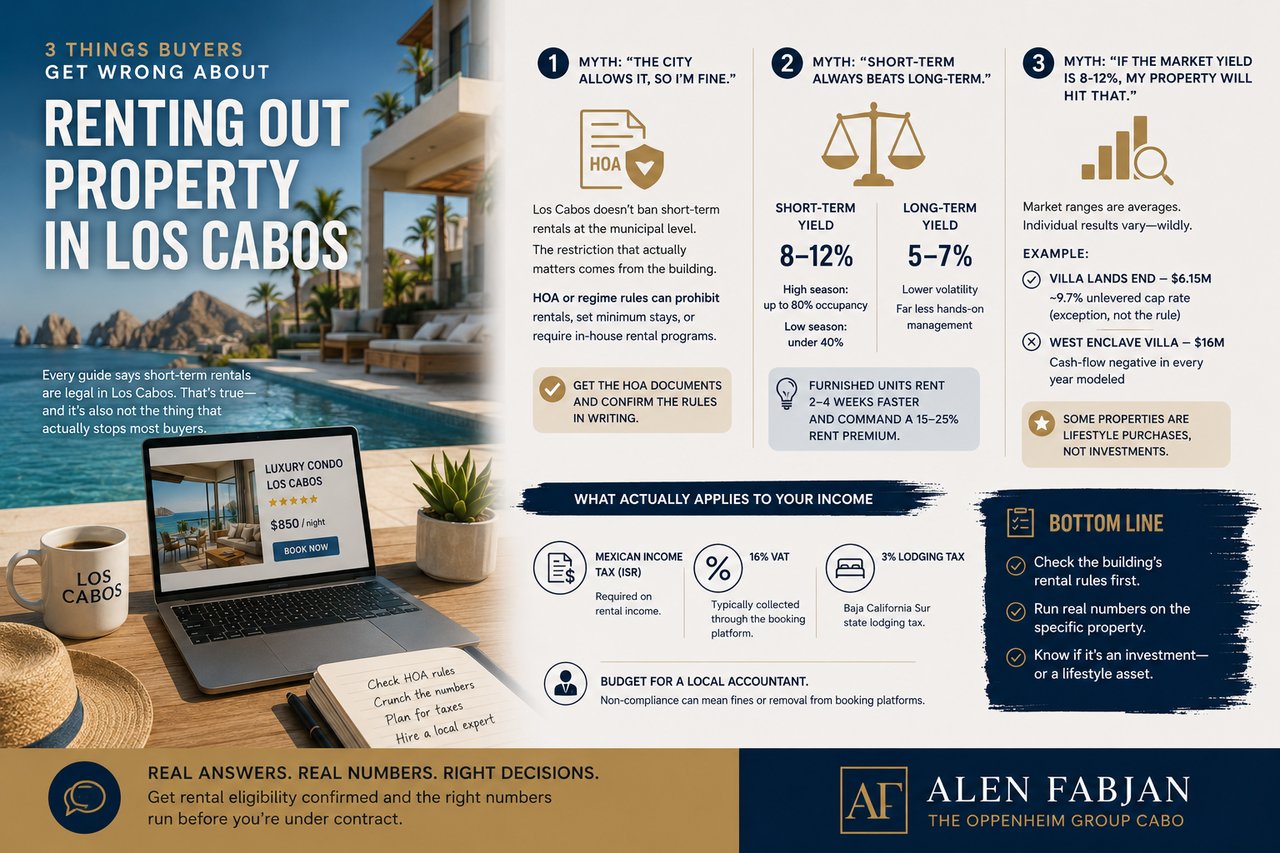
Beyond lifestyle appeal, Los Cabos has increasingly become a performance-driven investment market. Vacation rental demand has remained strong thanks to year-round tourism, a growing luxury hotel scene, and continued direct flights from the United States and Canada.
Many investors purchasing condos or smaller homes in Los Cabos today are targeting both lifestyle use and rental income. Well-located properties near the Tourist Corridor, Palmilla, El Médano Beach and Puerto Los Cabos often achieve attractive occupancy levels during peak travel seasons.
For investors, this hybrid model — personal use combined with short-term rental income — has become one of the key drivers behind continued foreign demand.
Compared to other global resort markets such as Hawaii, California coastal towns or parts of the Caribbean, Los Cabos still offers:
• Lower property taxes
• Relatively strong rental demand
• Limited coastal land supply
• Continued tourism growth
These fundamentals help support long-term property values even during periods of market adjustment.
For investors who missed the buying opportunities before the pandemic boom, the current market environment may present a more balanced entry point.
Bottom line
The pandemic boom in Los Cabos created pricing expectations that the market is now recalibrating. The extraordinary demand seen in 2021 was driven by remote work, lifestyle migration and a global search for space and sunshine. Today the market has transitioned into a more balanced phase.
Inventory has increased, price reductions have become more common and buyers are negotiating more carefully. But the core drivers behind Los Cabos real estate — tourism growth, international demand, limited coastal supply and continued infrastructure investment — remain intact.
For sellers, the lesson is clear: pricing realistically from the start is essential.
For buyers and investors, the current market may offer something that was almost impossible to find during the pandemic boom: opportunity and negotiating leverage.
Considering investing in Los Cabos?
If you are exploring opportunities in the Los Cabos real estate market — whether for a second home, vacation rental investment or long-term property ownership — understanding current pricing trends is essential.
Every community in Los Cabos behaves slightly differently. Areas such as Palmilla, Puerto Los Cabos, Querencia, Pedregal and the Tourist Corridor all have their own dynamics when it comes to inventory, pricing and buyer demand.
If you would like a deeper look at the current market, I regularly prepare market briefings and pricing analyses for international buyers and investors interested in Los Cabos.
About the author
Alen Fabjan is the Managing Broker for The Oppenheim Group Cabo, specializing in luxury and investment real estate across Los Cabos.
Originally from Europe and now a long-time resident of Cabo San Lucas, Alen works primarily with international buyers from the United States, Canada and Europe looking to invest in ocean-view homes, resort communities and branded residences.
His focus is on market analysis, pricing strategy and long-term investment value in one of Mexico’s fastest-growing luxury real estate markets.
Through his advisory approach, Alen helps clients navigate everything from community selection and market cycles to rental potential and resale strategy.
Contact:
Alen Fabjan
Managing Broker – The Oppenheim Group Cabo
📞 +1 480-260-1006
📧 [email protected]